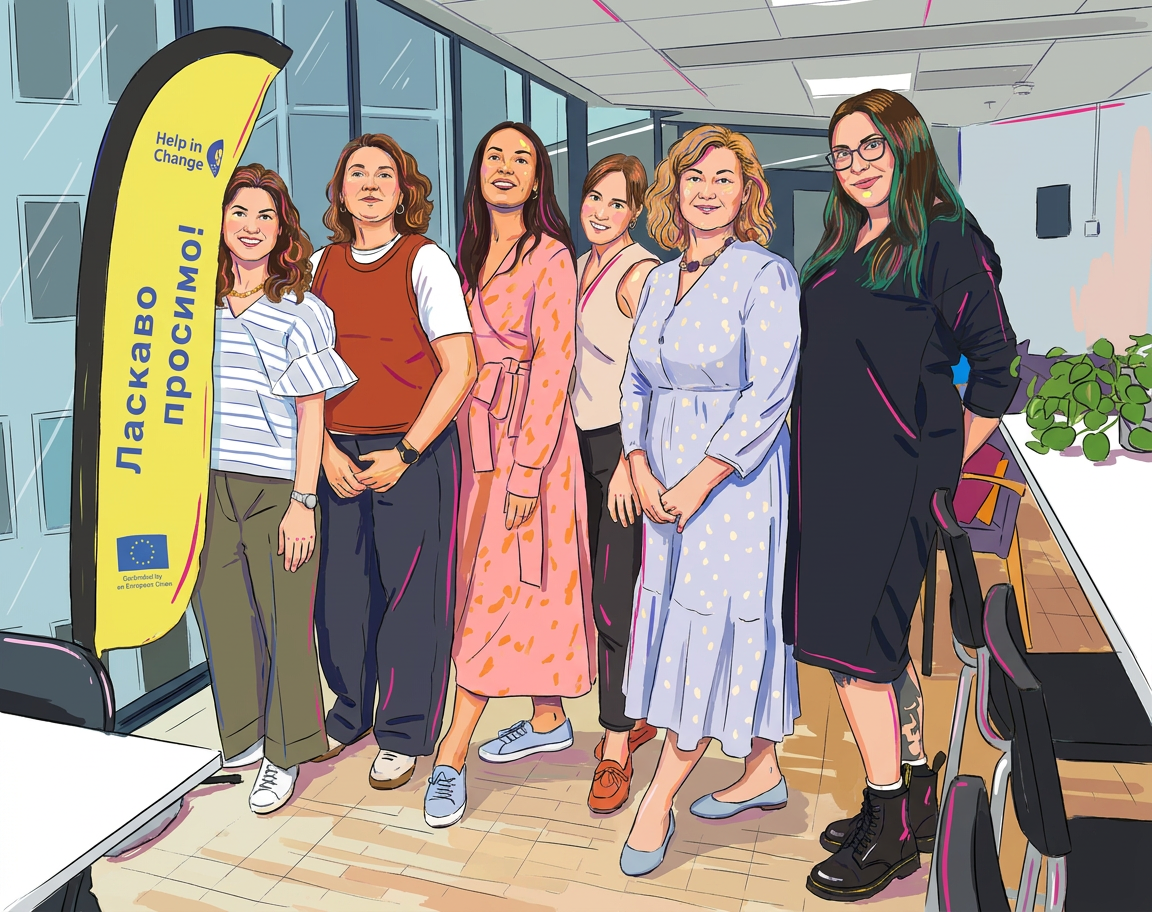
A Book We Didn't Know We Were Writing
The Story of SHE-UNET: Pillars of Power
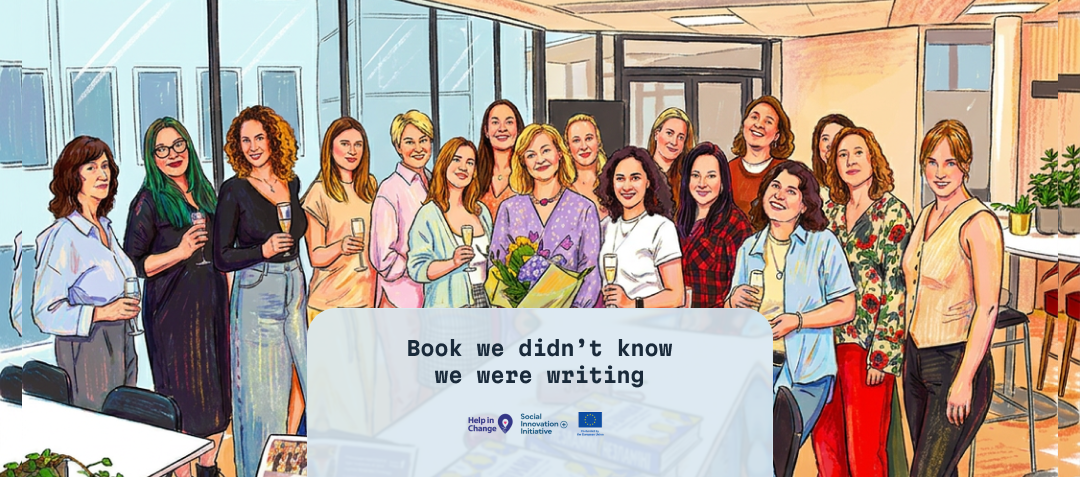
Note: names have been changed, and some scenes bring together details from the experiences of several participants. The emotions, discoveries and changes described here are rooted in the real programme and in the real experiences of the women who took part.
Prologue
Do you like reading books? Not skimming them — really reading them, slowly, all the way to the end, and then sitting there for another moment, your hand still resting on the last page, not quite ready to close it.
Most books begin because someone decides to write one. This one happened differently.
When Vallentuna invited Help in Change to join SHE-UNET, we thought we were creating a programme: eight meetings, twelve women, a team of experts, topics we believed mattered. Perfectly reasonable words. Only later did we realise they didn't quite describe what had happened. Because this story began before the first meeting. It began with twelve places.
Chapter One: Before the First Page
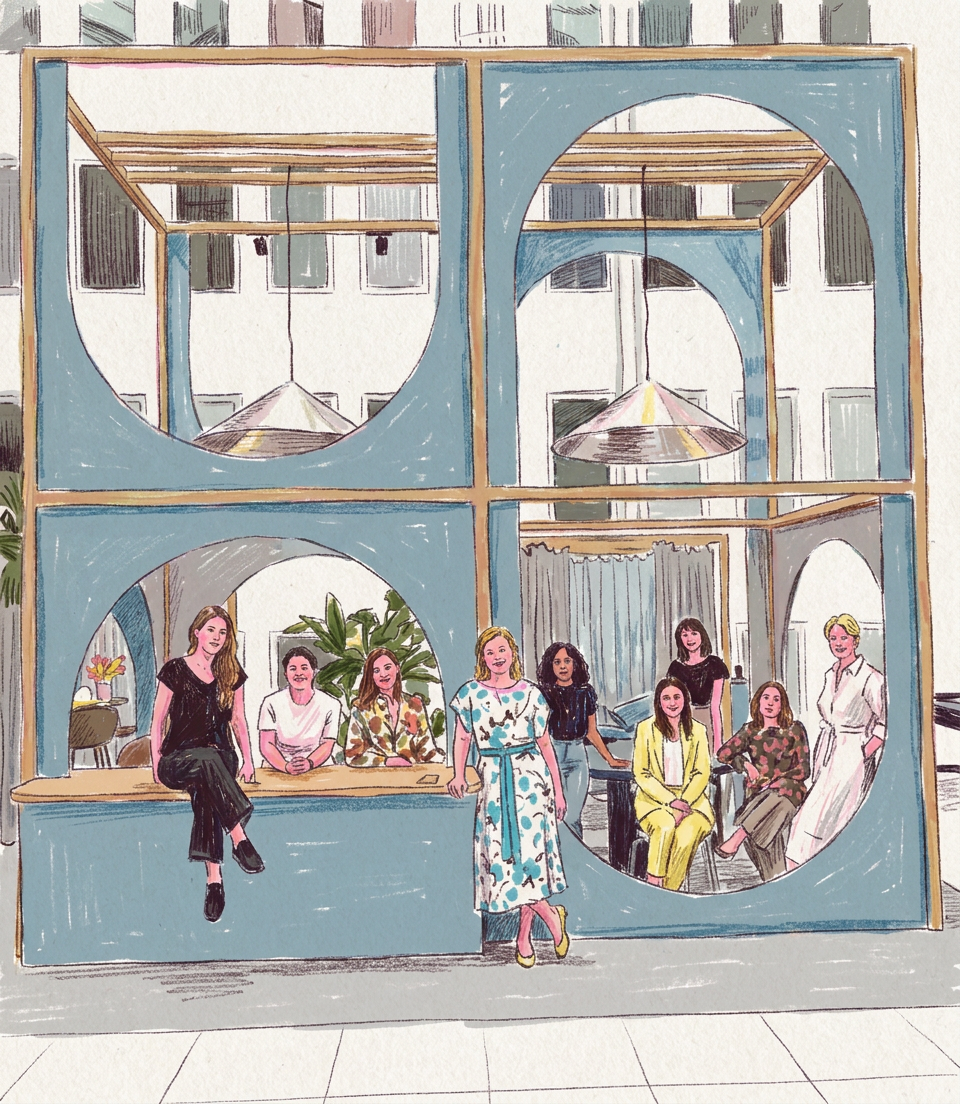
We thought very carefully about who would take those twelve places — not because twelve was an important number, but because the people were.
We wanted to create a group in which a woman would not have to prove that she was coping. A place where she could arrive tired, uncertain, curious, sceptical, hopeful — sometimes all of those things at once — and still feel that there was a place for her.
So before we began talking about safety, resilience or self-confidence, we tried to create the space for those things first.
Most of the women who formed the group at the beginning were still part of it at the end. A few weeks in, for reasons of their own, two of the twelve stepped away — and we've come to think that's part of this story too, not something to smooth over. For the rest, something simple kept happening: they wanted to return, the following Saturday, at the same time. Perhaps that is what belonging can look like.
Chapter Two: The Room
Our meetings took place in Södermalm, in a hall just a few minutes from Mariatorget. While we were meeting, spring slowly turned into summer. The bushes along the way began to bloom. The light changed. The city stayed bright later and later. Small things — but in many ways, this entire project was made of small things.
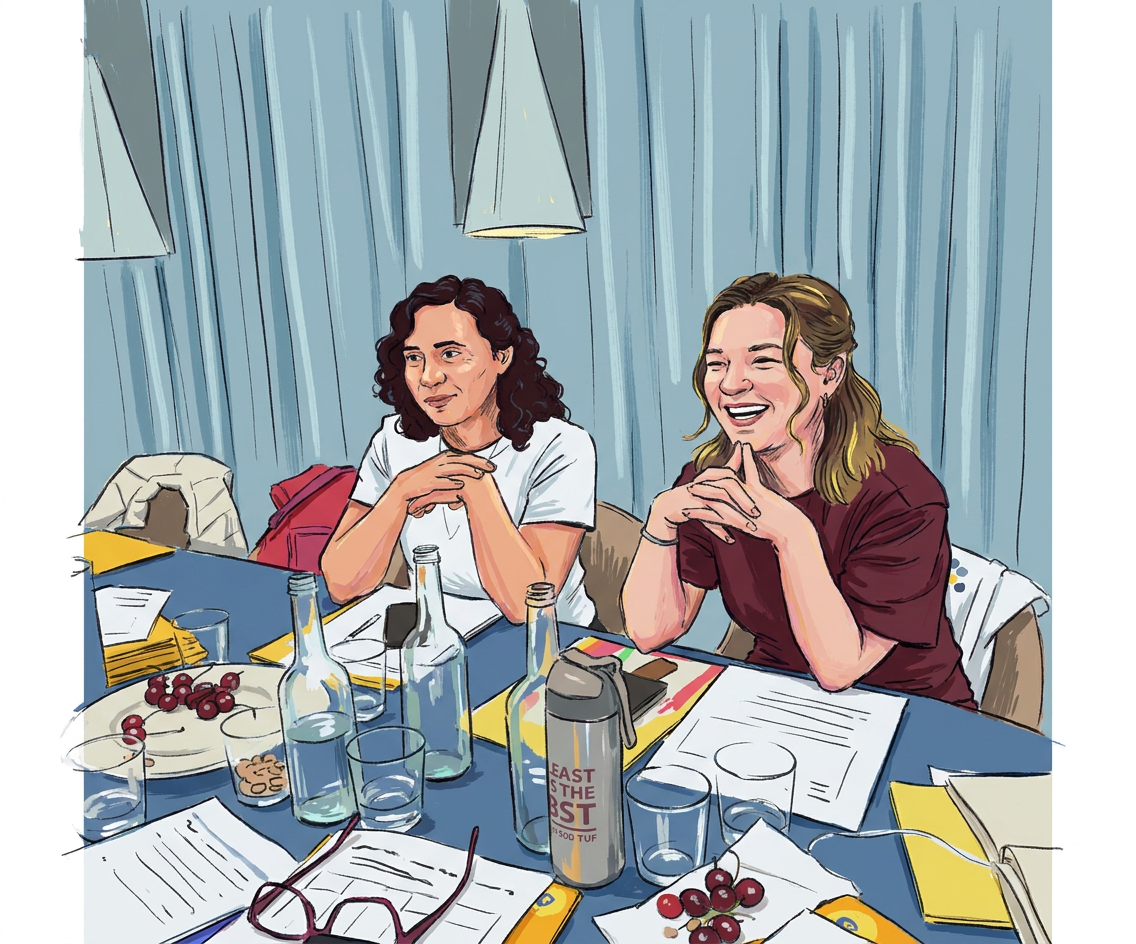
Thanks to our partners at Embassy House, we had a beautiful space, and we treated beauty as something more meaningful than decoration. A table prepared with care. Food. Flowers. The room and all its details quietly said, without needing words: you were expected. A place was prepared for you. You are worth preparing for.
We often talk about self-confidence as though it is built through knowledge. But we began to wonder whether sometimes it starts much earlier than that — with the experience of walking into a room and feeling that your presence there has value.
Chapter Three: What We Thought We Were Bringing
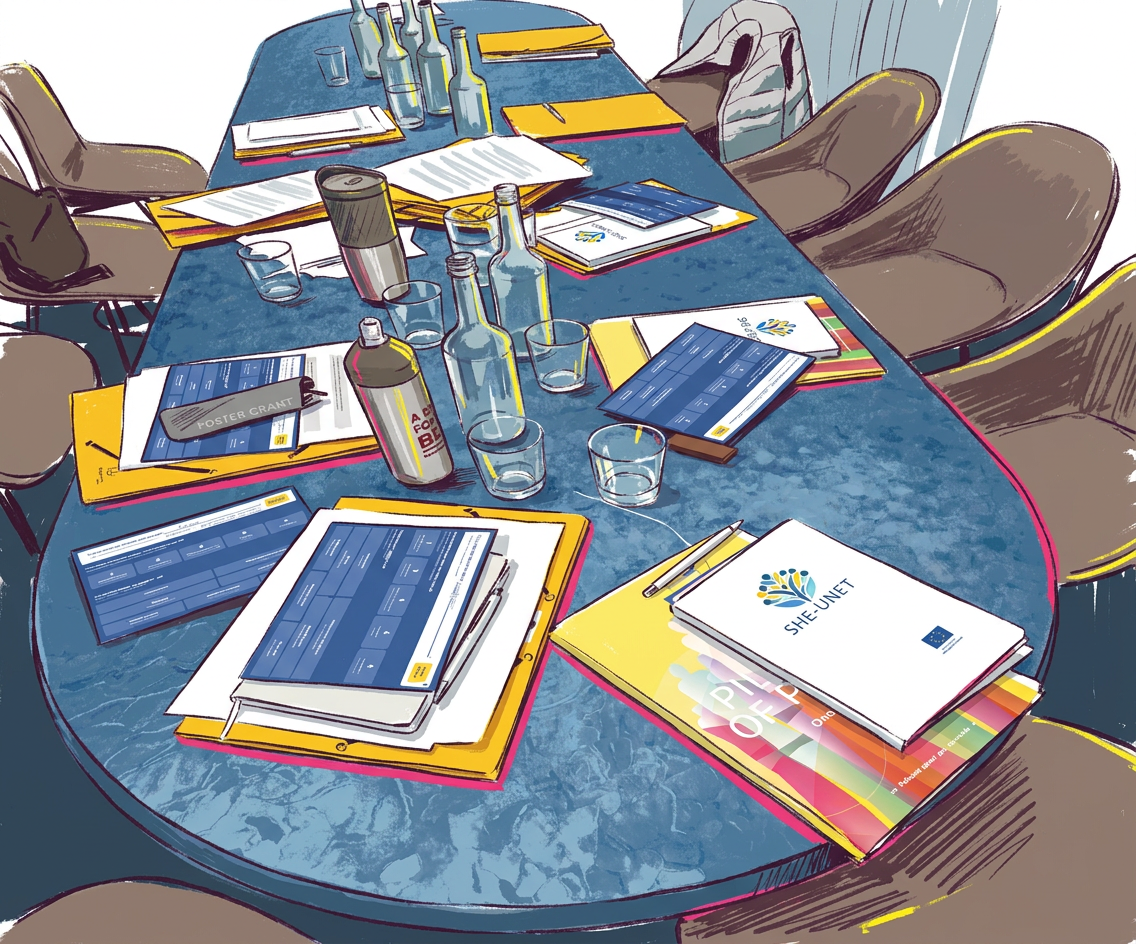
There was never just one expert in this programme. Svetlana led the main journey, shaping SHE-UNET piece by piece, while different members of the Help in Change team brought their own knowledge, experience and ways of seeing.
We wanted to give the women the most useful things we knew: the most interesting exercises, the most valuable tools. We believed in a simple idea — sharing is caring. At the beginning, we thought our role was to give: knowledge, methods, questions, ideas.
But gradually, the women showed the team that something else mattered just as much. Space. And time.
Chapter Four: The Corridor
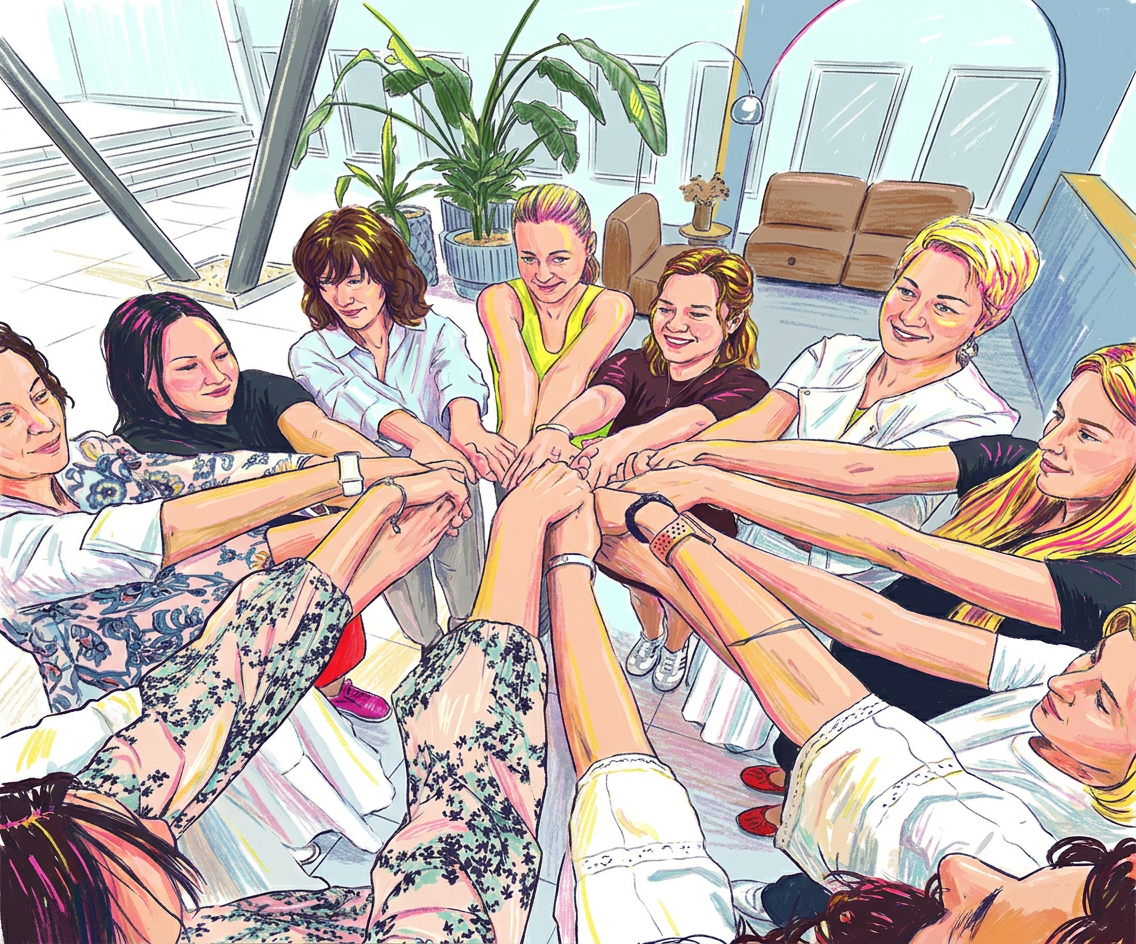
One Saturday, we created a narrow corridor between two rows of women. One participant — let's call her Oksana — stood at the beginning. She was afraid. No words could simply make that fear disappear, so nobody tried to persuade her not to feel it. The women simply stayed beside her.
And she walked. One step. Then another. And another.
When she reached the end, nothing dramatic happened. But the fear had not disappeared either — she had simply discovered that it did not get the final word.
Courage does not always arrive before the first step. Sometimes it arrives with it.
Chapter Five: Roots
On another Saturday, we asked the women to look at their strengths. At first, one of them searched in the most obvious place — herself. Then the picture became wider. Her mother. Her grandmother. The women who came before them. Her culture. Ukraine. Everything she had learned, carried, lived through, and managed to preserve.
What had once seemed like something left behind suddenly began to look different. Not baggage. A foundation.
She realised that she was not beginning her life again from zero. None of them were. There is a particular kind of relief in understanding that a new life does not require you to erase the old one. Very often, the past is not something we need to run away from. It is something we can stand on.
Chapter Six: What the Group Carried
Somewhere around the middle of those Saturdays, the group itself became part of the programme. Not because we had planned it as an exercise — it simply happened. The women began seeing in one another things they could not yet see in themselves.
One participant found it difficult to name her talents. Being able to support someone. To organise. To find a solution. To really listen. All of these things seemed too ordinary to her to count as abilities. Then the other women began telling her what they saw. For a moment, she wanted to disagree. Instead, she said: "Thank you. I'll take that with me."
We love that sentence. Because sometimes accepting one of your strengths is harder than admitting one of your weaknesses.
Another woman later described our meetings almost as home: warm, safe, surrounded by people who had begun to feel close. And she used one word that stayed with us: valuable. Not successful. Not productive. Valuable. Those are different things.
Chapter Seven: Small Sentences, Big Changes
Toward the end of our meetings, change did not arrive in grand declarations. It appeared in small sentences.
One woman said she had stopped spending so much energy worrying about things she could not control. Another began studying — no longer because she had to, but because she wanted to. Another started putting herself first and caring for herself differently. Another said that after every meeting she felt a little more confident and took one small step forward.
These are very small sentences. But they describe rather large things. In one of our final exercises, the women allowed themselves to imagine not what seemed realistic at that moment, but what they truly wanted their lives to become. And then they returned to the present — not to change everything at once, but to find the first one percent. One place to begin.
Chapter Eight: What the Numbers Quietly Confirmed
Later, we asked the women what had changed. The numbers did not create this story. They simply confirmed that what we had been seeing in the room was not accidental.
Among the women who completed the final survey, all reported greater self-confidence and better emotional wellbeing. All said they understood more clearly what they wanted. And all felt more motivated to keep moving forward. When they rated the programme — its content, facilitators, safety, atmosphere, practical value and overall experience — almost every rating was the highest possible one.
But what stayed with us most was not a number. One woman wrote: "Before, I didn't hear myself. Today, I hear my own wishes and move forward with confidence."
Perhaps that is the shortest description of the entire programme.
Chapter Nine: The Chapter We Would Rewrite
When you tell a story like this, it is very tempting to make everything sound perfect. It wasn't.
We prepared very carefully — perhaps too carefully. We wanted to bring the most useful tools, the strongest exercises, the best of what our Help in Change team had to offer. And one of the clearest things the women told us afterwards was very simple: give us more time. More time to talk. More time to stay with one discovery. More time to reflect. More time simply to be together.
We thought value meant bringing more. The women showed us that sometimes value means leaving more space. If we were to rewrite this chapter, that is what we would change. Less material. More white space.
Chapter Ten: The Last Page?
All eight planned meetings took place. And we celebrated together — certificates, gifts, food, photographs, the ordinary rituals we use to tell ourselves that something has come to an end.
But the question we kept hearing afterwards had very little to do with endings. It was: What happens next? When will we meet again? Can this continue?
And that was when we understood the title of this story. We had never intended to write a book. We thought we were simply creating a programme of eight workshops. But somewhere between the first carefully prepared meeting and the final conversation that nobody quite wanted to end, a book had appeared.
Not a book about twelve women who became strong. They were already strong. It is a book about twelve women who began to notice what they could stand on — their history, their abilities, one another, and themselves.
So we hope this is not the last page. Perhaps this is simply the point where we hand the story to the people reading it today.
Who will help us write the next chapter?